
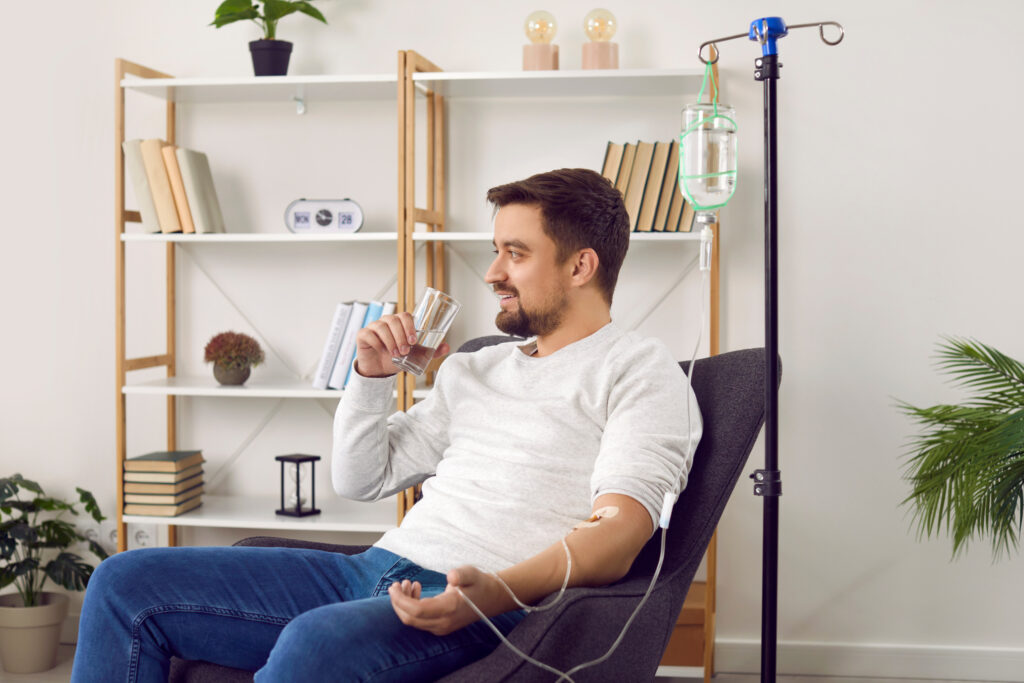
Ketamine Therapy: What You Need to Know
At Sana Lake, we understand that exploring alternative treatments like ketamine therapy can raise a lot of questions. Below, we answer key concerns and provide a clear, patient-focused overview of what ketamine therapy involves, including:
- Does ketamine therapy get you high?
- How old do you have to be for ketamine therapy
- How much is ketamine therapy near me?
- How to prepare for ketamine therapy?
- Who is not a good candidate for ketamine therapy?
- What does ketamine therapy feel like?
- Is ketamine therapy covered by insurance?
Does Ketamine Therapy Get You High?
One of the most common questions people ask is whether ketamine therapy will make them “high.” In therapeutic settings, the dose and context are carefully controlled and supervised by medical professionals.
During a treatment session, many patients report a “gentle wave of calmness” and relaxation, rather than a party-type “high.” Infusions often produce a dream-like or dissociative sensation. Sometimes the sensation is described as floating, an altered perception of time or body awareness, but within a safe clinical environment. Of important note: while the patient’s physical experience is altered, the goal of therapy is not recreational intoxication, but rather therapeutic relief, especially for conditions like depression, anxiety, and PTSD in difficult cases. Because of the dissociative aspect, some people may describe it as “high,” but the effect is distinct from recreational drug use and is medically supervised. So yes, you may feel a different sensation, but in the clinical context this is intended, monitored, safe, and therapeutic—not a typical recreational “high.”
How Old Do You Have to Be for Ketamine Therapy?
Age eligibility is another frequently asked topic when it comes to families searching for Ketamine therapy in the Missouri area. For the FDA-approved nasal spray form of ketamine (Esketamine, which can be found by the brand name Spravato), the indication is for adults 18 and older. For off-label use of intravenous (IV) or intramuscular (IM) ketamine, some clinics may treat adolescents (for example, ages 13-17) in very specific and carefully supervised cases—but such treatments are not the norm and depend on health status, parental consent, and other factors. The decision is less about a hard age cutoff and more about overall health, maturity, support systems, and medical/psychiatric suitability. Some treatment centers only treat adults (18+), but each person is evaluated individually, and for younger patients, the treatment center may collaborate closely with medical/psychiatric specialists to determine eligibility or different therapeutic options that may be more suitable for adolescents.
How to Prepare for Ketamine Therapy
Preparation can help you get the most benefit out of treatment and ensure your safety.
- Medical/psychiatric evaluation: Before your first session, we will perform a full evaluation of your health, medications, medical history (heart, kidney, liver, blood pressure), and psychiatric history.
- Fasting or light meal: We may ask you to avoid heavy meals for a few hours before treatment to reduce the risk of nausea or discomfort.
- Avoid certain substances: It’s important to avoid alcohol, recreational drugs, and sometimes specific medications (depending on your regimen) before therapy, to prevent unwanted interactions or heightened side effects.
- Set an intention & create a safe space: You’ll be in a calm, therapeutic environment (quiet room, headphones, possibly an eye-mask). Having a mindset of openness and allowing the experience to unfold is helpful.
- Plan for aftercare: After the session, you’ll want to follow up with your provider. Some people schedule a light meal, hydration, and rest time. Your therapist and providers will work together on what a full continuum of care looks like when you incorporate ketamine therapy into your therapeutic treatment plan.
Providers will typically provide you with detailed “what to expect” information when you schedule your first treatment to help you prepare effectively.
What Does Ketamine Therapy Feel Like?
Understanding the subjective experience may help you understand whether or not ketamine is right for you.
Many describe a warm or even “floating” sensation while undergoing ketamine therapy. It has also been described as a sense of being detached from the usual chatter of the mind. Some patients have reported heightened sensory awareness, meaning colors, sounds, and textures may feel more intense or unusual. A common descriptor that you may have heard used is an “out-of-body” sensation or feeling as if you are watching yourself from outside, as well as some reporting having deep introspective insights.
Afterwards, patients often say they feel lighter, less burdened, as if some mental weight has shifted.
Some side effects of Ketamine therapy can include: temporary dizziness, nausea, elevated blood pressure, blurred vision, or anxiety during the session. Patients are medically supervised during these sessions to ensure they are safe and purposeful.
Who Is Not a Good Candidate for Ketamine Therapy?
As powerful as ketamine therapy can be, it is not suitable for everyone. Safe and effective treatment depends on proper screening.
Some common exclusion criteria include:
- History of psychosis or schizophrenia/schizoaffective disorder: Ketamine’s dissociative effects may exacerbate these conditions.
- Uncontrolled hypertension, serious heart disease, arrhythmias, or cardiovascular instability: Because ketamine can raise heart rate and blood pressure, not everyone is healthy enough for this option.
- Active substance use disorder or recent heavy recreational drug use: Because ketamine has abuse potential and the therapy requires stability, it is not advised for those who are actively abusing substances. A medical detox prior to ketamine therapy is appropriate.
- Pregnancy or breastfeeding: There is limited safety data for ketamine’s use in these populations.
- Severe liver or kidney dysfunction, glaucoma, seizure disorders, or inability to comply with the treatment protocol (such as transportation, abstaining from other drugs and alcohol, after-care, and monitoring).
Provider teams conduct comprehensive assessments and will guide you if ketamine therapy is or is not appropriate in your specific case.
Is Ketamine Therapy Covered by Insurance?
Insurance coverage for ketamine therapy is one of the more complex and evolving topics. Many insurance providers do not cover off-label use of ketamine (IV, IM, non-FDA-approved indications) for mental health conditions. This is because such uses are considered experimental or investigational in many plans; however, the FDA-approved version—Esketamine (Spravato) nasal spray is more likely to be covered by insurance, since it has specific indications for treatment-resistant depression in adults.
