

At a glance: For moderate drinkers, a month without alcohol can significantly improve liver fat and sleep. However, if you have a history of heavy daily use, stopping suddenly can be physically dangerous. Seek medical advice if you have previously experienced tremors, seizures, or other severe withdrawal symptoms when attempting to quit alcohol.
The holiday season is often a blur of social events and celebrations. As January 1 approaches, many people feel an urge to hit the reset button. Dry January has become a popular way to do this.
The idea behind dry January: you stop drinking alcohol for the entire month. This challenge is a great way to look at your relationship with alcohol and give your body a break.
This move toward ‘sober curiosity’ isn’t just a trend, though. According to Gallup, 53% of Americans now view moderate drinking as harmful to health, a major increase from previous decades. As the ‘no amount of alcohol is safe’ message spreads, more people are using Dry January to reevaluate their relationship with alcohol and how it is impacting their life and their health.
The Health Benefits of a One Month Break from Alcohol
Research shows that taking a break from alcohol can have a massive impact on your health. According to a study published in BMJ Open, moderate drinkers who quit drinking for one month saw a significant drop in liver fat, blood pressure, and cholesterol.
Other reported benefits include:
- Better sleep quality and duration.
- Improved daily concentration and mental clarity.
- A reduction in systemic inflammation.
These benefits happen because you are giving your liver and your brain a chance to heal from the inflammatory effects of alcohol.
Is Dry January Safe For You?
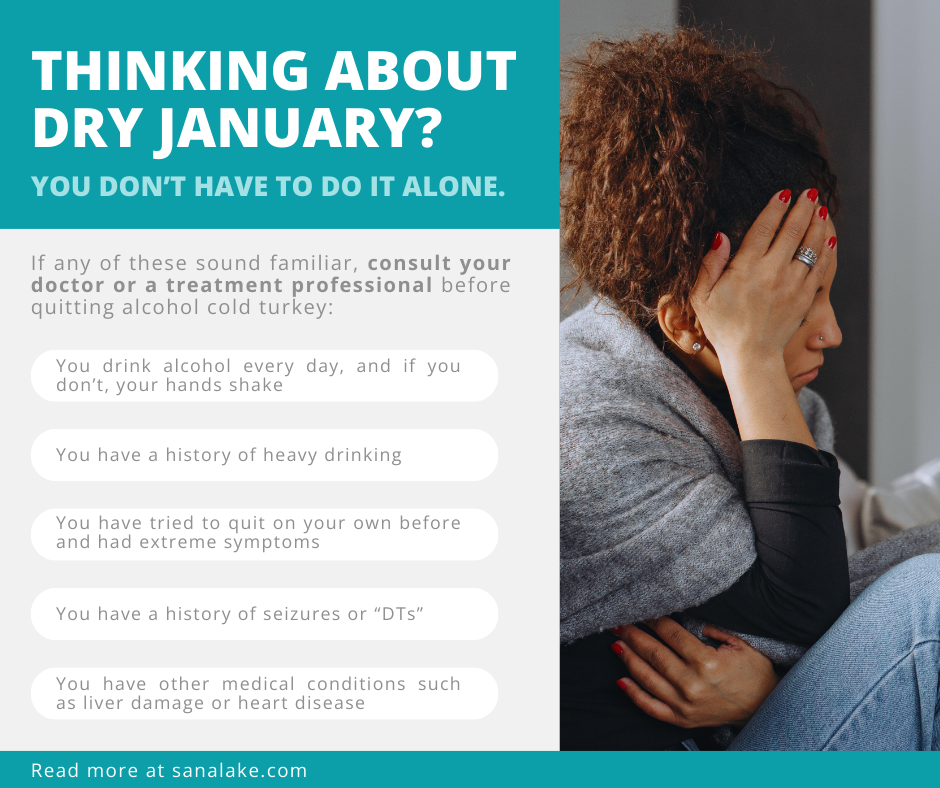
Dry January is not a one size fits all solution. For some, it is a simple health challenge. For others, it can be a physically dangerous undertaking. If you have been drinking heavily or daily, your body might have a physical dependence on alcohol. Stopping suddenly can cause your system to go into shock.
Signs You Should Not Do Dry January Alone
- You drink alcohol every day to feel normal or to stop your hands from shaking.
- You have a history of heavy drinking. This is defined as more than four drinks a day for men or three for women.
- You have tried to quit before and experienced severe sweating, a racing heart, or extreme anxiety.
- You have a history of seizures or have experienced “the DTs” (Delirium Tremens) in the past.
- You suffer from other medical conditions like heart disease or liver damage that make withdrawal more dangerous.
If any of these sound familiar to you, do not try to detox from alcohol on your own. Medically-monitored detox is the safest route.
Healthy Sobriety vs. White Knuckling
There is a big difference between being sober and being in recovery. Many people approach Dry January by “white knuckling” it. This means they use pure willpower to stay away from alcohol while counting down the days until February 1.
When you white knuckle, you are often miserable. You might feel irritable, restless, and resentful of people who are still drinking.
Removing the substance does not fix the underlying reasons why a person drinks. If you do not replace alcohol with healthy coping skills, you are likely to return to the same or even heavier drinking patterns in February.
Healthy sobriety is different. It is about finding a way to live where you do not feel like you are missing out. It involves building a support system and learning how to manage stress without a glass in your hand. It is much easier to stay sober when you are not doing it alone.
Red Flag Withdrawal Symptoms During Dry January
The physical risks of stopping alcohol are the most important thing to consider. Alcohol is a central nervous system depressant. When you drink heavily over a long period, your brain compensates by staying in a state of high alert. If you remove the alcohol suddenly, your brain stays in that high alert mode. This leads to withdrawal.
Symptoms can start small but escalate quickly. Within six to twenty-four hours, you might feel shaky or anxious. However, more severe symptoms like hallucinations or seizures usually appear between two and four days after the last drink. Delirium Tremens is a severe form of withdrawal that can be fatal without medical intervention. This is why being honest about your drinking habits is a matter of life and safety.
Alcohol withdrawal red flags:
- Persistent tremors or shaking in your hands and body that make daily tasks difficult.
- High fever, heavy sweating, or a heart rate that feels like it is racing while you are sitting still.
- Mental confusion, such as not knowing where you are or what day it is.
- Seeing or hearing things that are not there, which are common signs of severe withdrawal.
- Extreme agitation or a feeling of “doom” that you cannot explain.
- Seizures, which require immediate emergency medical attention.
Building a Toolkit for a Successful Dry January
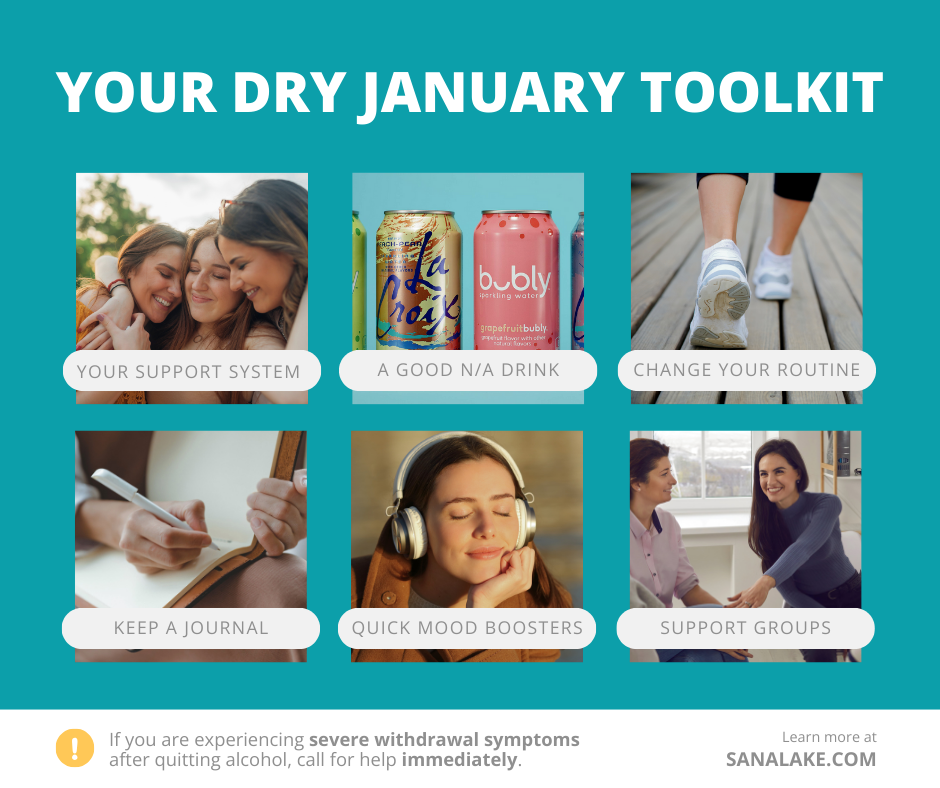
Going “dry” involves more than just an empty fridge. You need a strategy for the moments when life gets stressful. Many people use alcohol as a “buffer” for social anxiety or work stress. When you take that buffer away, those feelings come back in full force.
A study in Psychology of Addictive Behaviors emphasizes that social support is one of the strongest predictors of success in abstinence. If you spend your month avoiding everyone so you won’t be tempted, you may feel lonely and triggered. Instead, find “sober-curious” groups or tell your friends clearly that you are taking a break for your health. Having a person you can call when a craving hits makes a massive difference in whether you make it to February.
Your Dry January Toolkit for Success
- Tell at least two close friends or family members about your goal so they can hold you accountable.
- Find a non-alcoholic drink like sparkling water or tea to keep your hands busy during social hours, and always bring your own drinks.
- Identify your “witching hour,” which is the time of day you usually want a drink, and schedule a walk or a hobby for that specific time.
- Keep a journal of how you feel each morning. Noticing that you woke up without a headache is a powerful motivator.
- Create a “dopamine menu” of quick mood boosters. When the urge to drink hits, have a short list of things that help shift your energy, like listening to a favorite song, stepping outside, or calling a friend.
- Research local recovery meetings or support groups if you find that the “urges” are becoming too much to handle alone.
Your Safety is Top Priority
Dry January is a wonderful opportunity to prioritize your health and look at your habits with fresh eyes. Whether you want to lose weight, sleep better, or just prove you can do it, the benefits are real. But those benefits should never come at the cost of your physical safety.
If you find that you are “white knuckling” through every day, or if you feel physically ill when you stop drinking, please reach out for help. A medically supervised detox or a professional treatment plan is not a sign of failure. It is the smartest way to ensure that your January reset leads to a lifetime of health.
At Sana Lake Recovery, we can help you determine the safest path forward. Reach out to our admissions team today to learn more about our alcohol detox program in Dittmer, Missouri.

References
Mehta, G., Macdonald, S., Cronberg, A., Rosselli, M., Khera-Butler, T., Sumpter, C., Al-Khatib, S., Jain, A., Maurice, J. B., Charalambous, C., Gander, A., Ju, C., Hinds, P., Williams, R., Jalan, R., & Moore, K. P. (2018). Short-term abstinence from alcohol and changes in cardiovascular risk factors, liver function tests and cancer-related growth factors: A prospective observational study. BMJ Open, 8(5), e020485. https://bmjopen.bmj.com/content/bmjopen/8/5/e020673.full.pdf
National Institute on Alcohol Abuse and Alcoholism. (2021). Understanding alcohol use disorder. U.S. Department of Health and Human Services. https://www.niaaa.nih.gov/publications/brochures-and-fact-sheets/understanding-alcohol-use-disorder
Saad, L. (2025, August 13). U.S. drinking rate at new low as alcohol concerns surge. Gallup. https://news.gallup.com/poll/693362/drinking-rate-new-low-alcohol-concerns-surge.aspx
Schuckit, M. A. (2014). Recognition and management of withdrawal delirium (delirium tremens). New England Journal of Medicine, 371(22), 2109-2117. https://doi.org/10.1056/NEJMra1407298
Volkow, N. D., Koob, G. F., & McLellan, A. T. (2016). Neurobiologic advances from the brain disease model of addiction. Nature Reviews Neuroscience, 17(3), 185-190. https://doi.org/10.1056/NEJMra1511480
Witkiewitz, K., & Marlatt, G. A. (2004). Relapse prevention for alcohol and drug problems: That was Zen, this is now. Psychology of Addictive Behaviors, 18(3), 224-235. https://pubmed.ncbi.nlm.nih.gov/15149263/
